



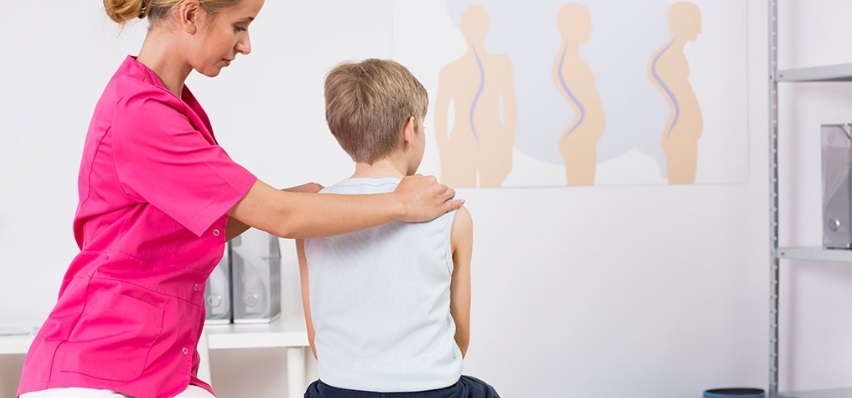
Posture disorder is a condition in which the physiological curves of the spine are disrupted due to underdeveloped muscular support (muscle groups of the back, chest, glutes, and the front of the thighs, which maintain the spine in the correct position). This is the stage of reversible disorders not associated with structural reconstruction of the spine’s supporting structures.
Patient age: Posture disorders typically develop in school-age children, although they can appear as early as 4–5 years old. Among schoolchildren, there are age periods when the appearance of various pathological conditions, including musculoskeletal issues such as spinal disorders, is more likely. These periods include grades 1, 5, and 8–9.
Regarding prevention of this serious condition that can affect a child’s life, the responsibility primarily lies with the parents. Scoliosis is not sudden; it develops over several years. This allows parents to notice problems in time and consult a doctor.
Causes of posture disorders: With the beginning of the school period, children face increased sitting loads, and the spine “tires.” The child may be unable to maintain an upright torso. Sometimes parents emphasize intellectual development, encouraging prolonged study, long reading sessions, or additional sedentary activities (e.g., playing musical instruments or drawing) instead of physical activity. This is detrimental, as a child’s health depends on movement. For children with high sedentary loads, parents should provide ergonomic furniture and alternate sedentary work with physical activity.
Overloading the spine also stresses the musculoskeletal and ligament systems and intervertebral discs, causing muscle pain and fatigue. Posture disorders may also result from chronic diseases that manifest as overall functional weakness or hypotonia (reduced tissue tension) of muscles and ligaments. Poor posture negatively affects the function of the heart, stomach, liver, and kidneys.
Types of posture disorders: Each type is characterized by specific positioning of the spine, shoulder blades, pelvis, and lower limbs:
- Kyphosis (hunchback)
- Round-concave back
- Flat back
- Flat-concave back
- Scoliotic (asymmetrical) posture
Treatment of posture disorders and early scoliosis in children:
The earlier parents notice posture issues, the more effective the following treatments can be:
- Therapeutic physical education
- Therapeutic massage
- Manual therapy
- Osteopathy
- Orthoses: belts and corsets
- Physiotherapy
Conservative treatment includes a set of corrective measures:
- Following an orthopedic regimen
- Medical corrective gymnastics
- Wearing traction devices (if needed)
- Therapeutic massage
- Swimming
Corrective measures, especially when prescribed at an early stage, often allow correction of existing posture disorders and prevent severe scoliosis.
If the curvature angle reaches 50 degrees, shoulder blades protrude, and a “hump” appears, surgery is the only option.
Scoliosis affects not only the spine but also all organs of the body. Parents should be aware of the severity of its consequences. Severe scoliosis negatively impacts cardiovascular, respiratory, musculoskeletal, and other systems, as well as the child’s psychological state.
Surgical treatment is the last resort for scoliosis in children. Various surgical techniques exist, but all involve the implantation of metal fixators on the spine (temporary or permanent) to mechanically correct the spinal curvature.