


A Healthy Spine Means Proper Posture, Energetic Movement, and Healthy Organs — and Nerves, Too
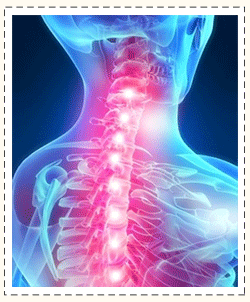
The spine protects the spinal cord, an essential part of the nervous system. This unique engineering structure performs a wide range of functions and bears various types of loads.
The spine consists of 32–33 bones called vertebrae, arranged consecutively and separated by cartilaginous cushions known as discs. The integrity of this structure is ensured by strong ligaments and intervertebral joints, making it both robust and remarkably flexible. However, this part of the skeleton is also the most vulnerable and is often the source of different types of pain.
In modern medicine, priorities have shifted: doctors aim not only to extend life but also to improve its quality. Spinal diseases are among the most common conditions significantly affecting human health.
In developed countries, 1–2% of the population loses work capacity due to back pain. Often, diseases of the spine and joints lead to dysfunctions of internal organs. Don’t wait until your spine signals serious pain — make an appointment at the Clinic of Vertebrology, Orthopedics, and Traumatology!
Remember: the spine and internal organs are closely connected!
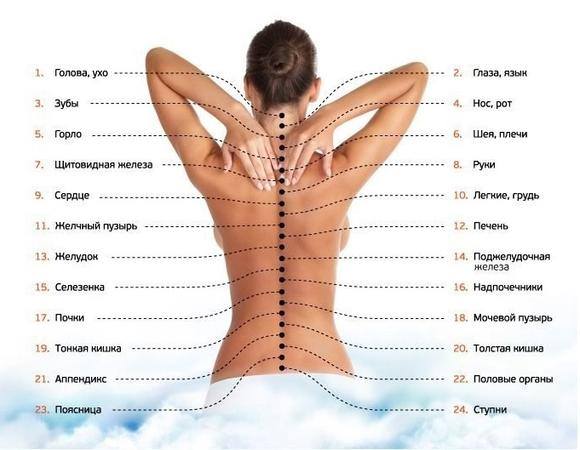
All internal organs are linked to the spine through a vast network of nerve endings. A slight decrease in nerve impulses to an organ — caused by compression or blockage of a vertebra with limited mobility — leads to minor dysfunctions in that organ’s activity. Initially, these go unnoticed, but over time the problem worsens. Conversely, when an internal organ becomes diseased, signals are sent back through the corresponding vertebra, causing pain.
More and more specialists from various medical fields recognize the vertebrogenic factor (spine-related influence) in the development and progression of their pathologies. This connection is most often seen in cardiology, gastroenterology, gynecology, and proctology, among others.
Cervical Section (C1–C7)
- C1: Headaches, irritability, high blood pressure, migraines, sleep problems
- C2: Eye diseases, allergies, hearing loss, fainting
- C3: Neuralgia, neuritis, acne
- C4: Hearing disorders, enlarged adenoids
- C5: Throat pain, angina, laryngitis
- C6: Neck, shoulder, and nape pain
- C7: Hypothyroidism, limited movement in shoulders and elbows
Thoracic Section (T1–T12)
- T1: Asthma, cough, pain in hands and palms
- T2: Arrhythmias, chest pain, ischemic heart disease
- T3: Bronchitis, asthma, pleurisy, pneumonia
- T4: Gallstones, jaundice, impaired fat absorption
- T5: Liver disorders, jaundice, blood clotting problems
- T6: Gastritis, ulcers, digestive disorders
- T7: Diabetes, ulcers, digestive and auditory disorders
- T8: Digestive disorders, hiccups, breathing difficulties
- T9: Allergic reactions, weakened immune system
- T10: Kidney disease, fatigue, weakness
- T11: Urinary disorders, chronic kidney disease
- T12: Digestive disorders, female genital diseases, infertility
Lumbar Section (L1–L5)
- L1: Hernias, constipation, colitis, diarrhea
- L2: Appendicitis, intestinal colic, hip and groin pain
- L3: Bladder disorders, impotence, knee pain
- L4: Calf, leg, and sciatic pain, urinary dysfunction
- L5: Edema, ankle pain, flat feet
Sacrum: Pain in the sacral area
Coccyx: Hemorrhoids, dysfunction of pelvic organs
The Cause of Any Spinal Pathology: Incorrect Load Distribution on the Supporting Structures
Causes of Overload on Supporting Structures:
✔ Congenital or post-traumatic deformities of vertebral bodies
✔ Destructive changes caused by osteoporosis, osteomyelitis, tuberculosis, cancer, and other conditions reducing vertebral strength
✔ Anomalies that disrupt spinal biomechanics and alter physiological curves
✔ Degeneration of intervertebral discs reducing shock absorption capacity
✔ Weakening of the muscle “corset” — reduced muscle tone in mobile areas like the neck and lower back creates conditions for microtrauma of discs and ligaments
Spinal Disorders
Postural Disorders
Posture is determined by the physiological curves of the spine, head position relative to the trunk, pelvic alignment, leg length, and foot position.
While poor posture isn’t a disease itself, an incorrect spinal position can cause severe spinal and nerve root conditions.
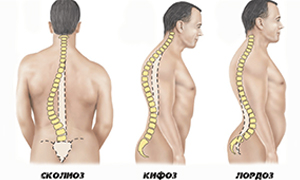
Scoliosis
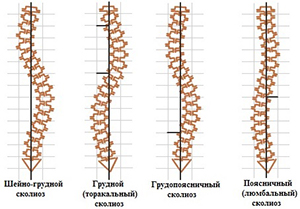
A three-dimensional deformity of the spine, characterized by vertebral torsion leading to rib hump formation. It alters the position of thoracic organs and affects musculoskeletal, respiratory, nervous, and cardiovascular systems. Severe cases may involve spinal cord compression.
Thoracic and lumbar scoliosis are most common. The body’s asymmetry is clearly visible from behind: the curve usually bends rightward, and posture asymmetry becomes evident. Postural disorders alter the back’s lateral profile.
Kyphosis
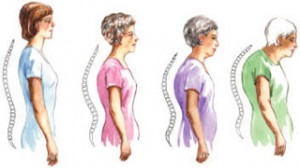
A condition marked by a “C”-shaped curvature of the spine. A hump appears on the back, distorting posture and causing pain. It affects children with congenital spine deformities and older women with osteoporosis.
The shoulders droop forward, the chest narrows, the diaphragm lowers, abdominal muscles weaken, and the trunk leans forward. The disease may lead to wedge-shaped vertebrae and degeneration of intervertebral discs, reducing chest mobility and limiting lung function.
Lordosis
An excessive forward curvature of the spine in the sagittal plane.
Causes include hip joint dislocations (shifting the body’s center of gravity forward) or obesity, particularly abdominal fat accumulation.
Patients show forward-thrust heads, flat chests, protruding abdomens, rounded shoulders, and spread knees. It causes spinal strain, muscle and ligament stretching, pain, limited mobility, and affects the heart, lungs, and digestive system.
Lordotic posture often leads to metabolic disorders, fatigue, and general malaise.
Osteochondrosis
A degenerative-dystrophic process in the cartilaginous tissue of vertebrae, including intervertebral discs and ligaments. It can affect the cervical, thoracic, and lumbar regions.
Intervertebral Hernia
Occurs when a disc protrudes, compressing nerve endings and spinal roots. The affected root sends pain impulses to the corresponding body region. If the hernia enters the spinal canal, it compresses the cord, causing numbness, paresis, or paralysis, potentially leading to disability.
Usually, a herniated disc is a complication of osteochondrosis.
Symptoms by Location:
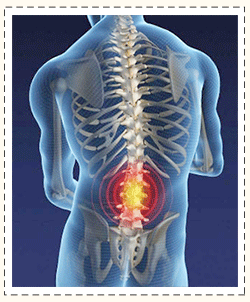
Thoracic section
| Pain during breathing, chest pain, blood pressure fluctuations |
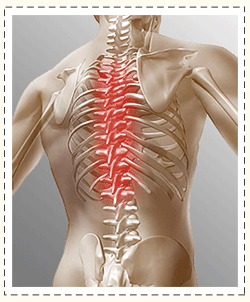
Cervical section
| Neck pain radiating to the shoulder or arm, headaches, dizziness, vision/hearing disorders, snoring, facial numbness |
Lumbar section
| Sharp or dull low back pain, numbness, sweating changes, cold feet, urinary or fecal issues, erectile dysfunction, menstrual disorders |
Spondylosis and Spondyloarthrosis
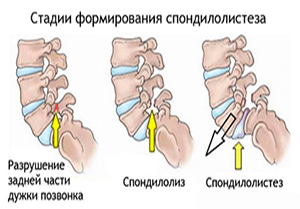
As osteochondrosis progresses, irreversible changes occur in vertebrae — marginal bone growths (osteophytes) — which can fuse adjacent vertebrae, a condition called spondylosis.
When osteophytes affect ligaments and intervertebral joints, it results in spondyloarthrosis.
Spondylolisthesis
A condition in which one vertebra “slides” forward or backward relative to the one below it.
It occurs mainly in the lumbar region and is caused by disc stretching under load.
Osteoporosis
A disease marked by reduced bone density, increasing fragility and fracture risk. Main causes include calcium deficiency and hormonal imbalance. People with sedentary lifestyles, smokers, and those who consume alcohol are at greater risk.
Radiculitis
Also known as nerve root syndrome, radiculitis affects the peripheral nervous system, caused by compression of spinal nerve roots. The most common cause is osteochondrosis, which hardens discs and compresses the nerves.
Salt deposits form at the junctions between altered vertebrae and discs, pressing on the roots and causing pain.
There are cervical, cervicobrachial, thoracic, and lumbosacral types of radiculitis.
If back discomfort becomes regular, consult a doctor.
Early diagnosis using tests, X-rays, CT, or MRI helps identify the exact cause and select the optimal treatment.